

Who founded Lab Emerald?
Aug 29, 2025
Leave a message
Hey there! As a supplier of lab emeralds, I often get asked, "Who founded Lab Emerald?" Well, let's dive into this fascinating topic and find out the story behind these beautiful gemstones.
First off, the concept of lab-grown emeralds isn't something that popped up overnight. It's the result of years of scientific research and innovation. The process of creating lab emeralds involves replicating the natural conditions under which emeralds are formed in the earth. But who were the brains behind this amazing feat?
The history of lab-grown gemstones dates back to the late 19th century. Scientists were trying to find ways to create gemstones in a laboratory setting, mainly for research purposes. It was a long and challenging journey, but they were driven by the desire to understand the formation of these precious stones.
In the case of lab emeralds, the initial attempts were made by a group of mineralogists and chemists. They were interested in studying the chemical composition and crystal structure of natural emeralds. By recreating these conditions in a controlled environment, they hoped to produce synthetic emeralds that were identical to their natural counterparts.

One of the early pioneers in this field was a French chemist named Auguste Verneuil. In the late 1800s, Verneuil developed a method for producing synthetic corundum, which is the mineral that makes up rubies and sapphires. His technique, known as the Verneuil process, involved melting powdered materials and allowing them to crystallize into a single crystal. Although Verneuil's method was mainly used for corundum, it laid the foundation for future research on lab-grown gemstones, including emeralds.
Over the next few decades, other scientists continued to refine the process of creating lab emeralds. They experimented with different chemicals and techniques to improve the quality and appearance of the synthetic stones. One of the breakthroughs came in the 1930s when a new method called the flux-growth process was developed. This method involved melting a mixture of chemicals in a crucible and allowing the emerald crystals to grow slowly over time.
The flux-growth process produced high-quality lab emeralds that were very similar to natural emeralds in terms of their chemical composition and physical properties. These synthetic emeralds were used mainly for industrial purposes, such as in lasers and electronics. However, as the technology improved, lab emeralds started to gain popularity in the jewelry industry.
Today, lab emeralds are produced using a variety of methods, including the flux-growth process, the hydrothermal process, and the chemical vapor deposition (CVD) process. Each method has its own advantages and disadvantages, and the choice of method depends on the desired quality and characteristics of the final product.
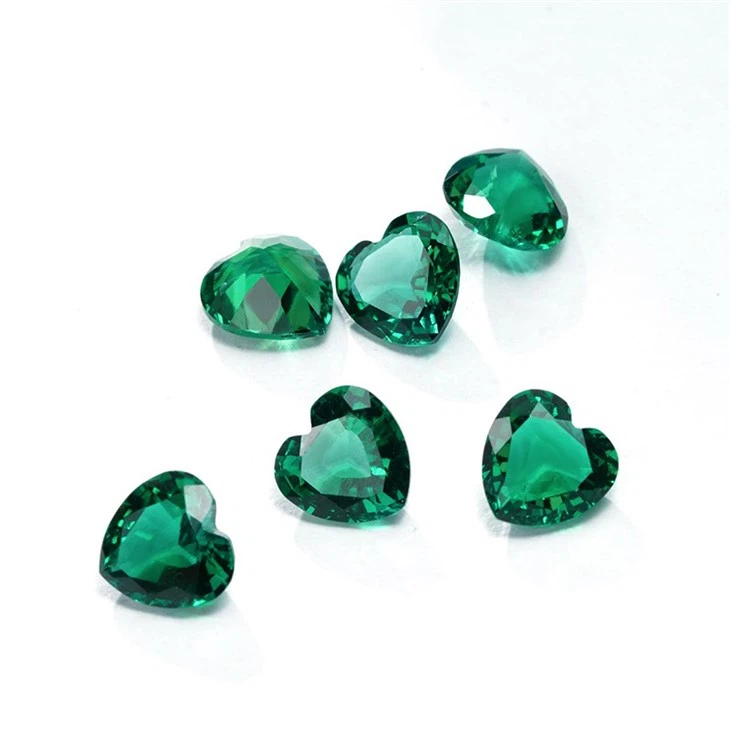
As a supplier of lab emeralds, I'm proud to offer a wide range of high-quality lab-grown gemstones. Whether you're looking for a Lab Grown Zambia Emerald, a Lab Grown Emerald Rough, or a Lab Grown Columbian Emerald, I've got you covered.
Lab emeralds have several advantages over natural emeralds. For one, they're more affordable, making them a great option for those on a budget. They're also more environmentally friendly, as they don't require the mining and extraction of natural resources. Additionally, lab emeralds are available in a wider range of sizes and colors, giving you more options to choose from.
If you're interested in purchasing lab emeralds, I'd love to hear from you. Whether you're a jewelry designer, a retailer, or an individual looking for a unique piece of jewelry, I can help you find the perfect lab emerald for your needs. Just get in touch with me, and we can start discussing your requirements.
In conclusion, the question of "Who founded Lab Emerald?" doesn't have a single answer. It's the result of the hard work and dedication of many scientists and researchers over the years. Thanks to their efforts, we now have access to high-quality lab-grown emeralds that are both beautiful and sustainable. So, if you're in the market for some stunning gemstones, consider lab emeralds – you won't be disappointed!
References
- "Gemstones: Their Sources, Descriptions, and Identification" by Joel Arem
- "The History of Synthetic Gemstones" by Richard W. Hughes
- Various scientific journals and research papers on lab-grown gemstones