

What is the history of rings?
Oct 08, 2025
Leave a message
Throughout the annals of human history, rings have served as more than mere adornments; they are silent storytellers, carrying within their circular forms the weight of cultures, traditions, and personal expressions. As a ring supplier deeply entrenched in the world of these timeless treasures, I've had the privilege of witnessing how rings transcend time and place, connecting people across generations. In this blog, we'll embark on a journey through the rich history of rings, exploring their evolution from ancient times to the modern era.
Ancient Beginnings
The story of rings dates back thousands of years to ancient civilizations. In ancient Egypt, rings were not only symbols of beauty but also held religious and magical significance. Egyptians crafted rings from materials such as gold, silver, and semi - precious stones, often inlaid with intricate designs. The circular shape of the ring was seen as a symbol of eternity, representing the never - ending cycle of life and death. Pharaohs and nobles wore rings adorned with hieroglyphics, which were believed to have protective and divine powers.
Moving to ancient Mesopotamia, rings were used as seals. The Sumerians, Akkadians, and Babylonians engraved their rings with unique symbols or cuneiform inscriptions. These rings were pressed into clay tablets to authenticate documents, contracts, and letters. They were a form of identification and a mark of authority, much like a modern - day signature.
In ancient Greece, rings were a part of daily life and a sign of social status. Greek artisans created rings with elaborate designs featuring mythological figures, animals, and geometric patterns. Rings were also exchanged as tokens of friendship and love. The Greeks believed that the vein in the fourth finger of the left hand, known as the "vena amoris" or the "vein of love," was directly connected to the heart. This belief later influenced the tradition of wearing wedding rings on the left - hand fourth finger.
Roman Influence
The Romans took the concept of rings to new heights. Rings became even more widespread and diverse in their use. In addition to being symbols of status and authority, Roman rings were used for practical purposes. Signet rings, engraved with the owner's seal, were used to seal official documents. These rings were often made of gold or silver and were passed down through generations.
Roman emperors and high - ranking officials wore rings adorned with precious stones such as emeralds, rubies, and sapphires. These stones were not only valued for their beauty but also for their supposed magical properties. For example, emeralds were believed to enhance fertility and protect against evil spirits.
Wedding rings also became an important part of Roman culture. The tradition of giving a ring as a symbol of betrothal and marriage began in Rome. The ring was seen as a binding contract between two families, and it was often made of iron, symbolizing the strength and durability of the union.
Medieval and Renaissance Periods
During the Middle Ages, rings continued to play a significant role in society. In the Christian Church, bishops and clergy wore rings as a symbol of their office and authority. These rings were often elaborate, featuring religious symbols such as crosses, saints, and angels.
In the feudal system, rings were used as a form of currency and a means of trade. Knights and nobles wore rings as a sign of their rank and allegiance. Rings were also given as gifts to show gratitude or loyalty.
The Renaissance period saw a revival of interest in classical art and culture. Ring designs became more intricate and detailed, inspired by the art and literature of ancient Greece and Rome. Goldsmiths and jewelers created rings with delicate filigree work, enamel, and gemstone settings. Rings were not only worn by the wealthy but also by the emerging middle class, who saw them as a way to display their newfound wealth and social status.
The Modern Era
The 19th and 20th centuries brought significant changes to the world of rings. The Industrial Revolution made it possible to mass - produce rings, making them more accessible to a wider range of people. New materials and techniques were developed, allowing for more diverse and affordable ring designs.
In the 19th century, diamond rings became extremely popular, especially engagement rings. The discovery of large diamond mines in South Africa in the 1860s led to a significant increase in the supply of diamonds. De Beers, a diamond mining company, launched a successful marketing campaign in the 20th century, promoting the idea that "a diamond is forever." This campaign solidified the tradition of giving a diamond engagement ring as a symbol of eternal love.
Today, rings come in a vast array of styles, materials, and designs. From simple bands to elaborate statement pieces, there is a ring for every taste and occasion. At our ring supply business, we offer a wide selection of rings to meet the diverse needs of our customers.
For those looking for a unique and romantic option, our Heart Shape Moissanite 925 Silver Ring is a perfect choice. The heart shape is a timeless symbol of love, and the moissanite stone adds a brilliant sparkle.
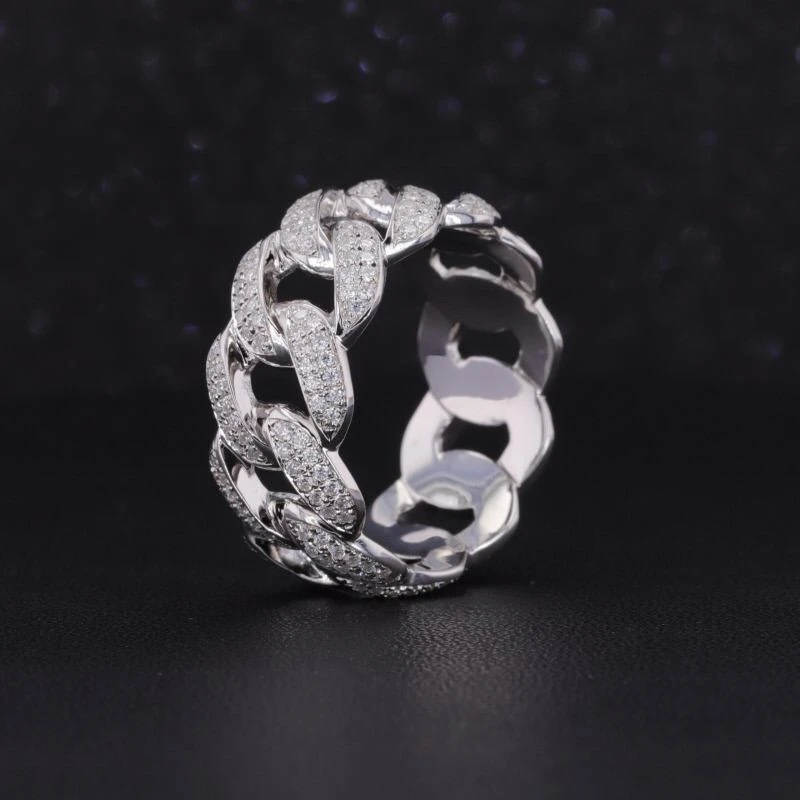

If you prefer a more modern and stylish look, our Moissanite Cuban Ring is an excellent option. The Cuban - style design is bold and fashionable, making it a great statement piece.
For couples planning their wedding, our Silver Moissanite Wedding Ring Set offers a beautiful and affordable alternative to traditional diamond wedding rings. Moissanite has a similar brilliance to diamonds but is more budget - friendly.
Conclusion
The history of rings is a tapestry woven with threads of culture, tradition, and personal expression. From their humble beginnings in ancient civilizations to the modern - day fashion accessories, rings have always held a special place in human society.
Whether you're looking for a ring to mark a special occasion, express your love, or simply add a touch of elegance to your outfit, we have the perfect ring for you. As a ring supplier, we are committed to providing high - quality rings at competitive prices.
If you're interested in purchasing our rings or have any questions about our products, please feel free to reach out to us. We look forward to the opportunity to discuss your needs and help you find the perfect ring.
References
- "A History of Jewelry" by Vivienne Becker
- "The Book of Rings" by Albert F. Calvert
- "Jewelry: The Body Transformed" by Joan Severa