

What is the durability of a none certified diamond?
Jan 12, 2026
Leave a message
The durability of a non - certified diamond is a topic that often sparks curiosity among both jewelry enthusiasts and potential buyers. As a supplier of non - certified diamonds, I've had extensive experience and in - depth knowledge about these precious stones.
Understanding Non - Certified Diamonds
First, let's clarify what non - certified diamonds are. A certified diamond comes with a grading report from a recognized gemological laboratory, such as the Gemological Institute of America (GIA) or the International Gemological Institute (IGI). This report details the diamond's 4Cs: carat weight, color, clarity, and cut. Non - certified diamonds, on the other hand, lack this official documentation.
There are several reasons why a diamond might be non - certified. Sometimes, smaller suppliers or miners may not have the resources to get every single diamond certified. In other cases, the diamond may be intended for industrial use rather than jewelry, where certification is less of a concern. As a non - certified diamond supplier, I source these diamonds from various reliable channels, ensuring that they meet high - quality standards even without the official paperwork.

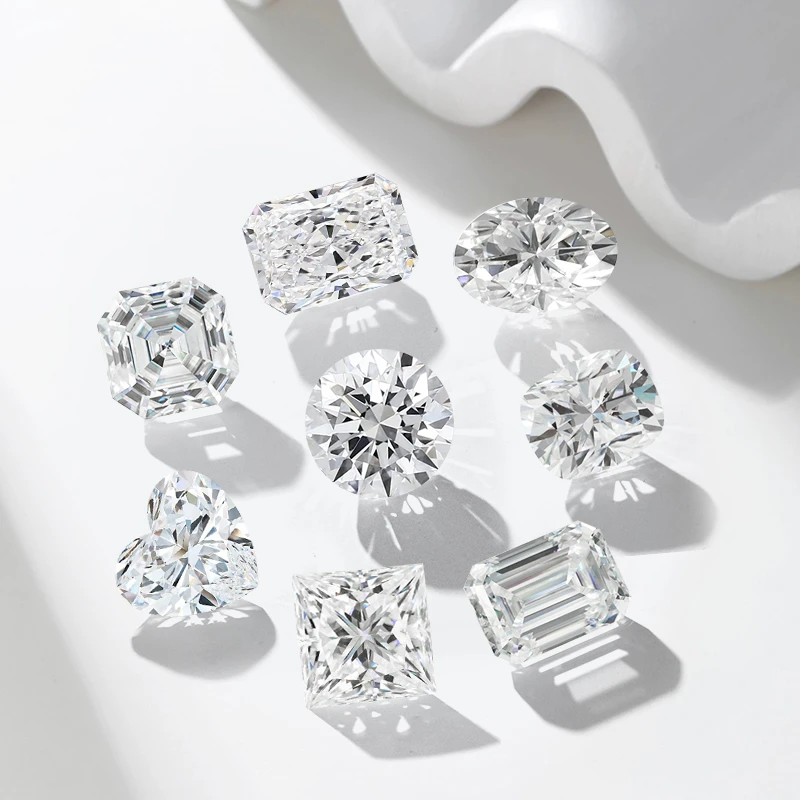
The Durability of Non - Certified Diamonds
When it comes to durability, non - certified diamonds are no different from their certified counterparts. Diamonds, in general, are the hardest known natural material on Earth, scoring a perfect 10 on the Mohs scale of mineral hardness. This hardness is due to the unique atomic structure of diamonds. Each carbon atom in a diamond is bonded to four other carbon atoms in a tetrahedral arrangement, creating an extremely strong and stable lattice structure.
This robust structure gives diamonds excellent scratch resistance. In daily wear, a non - certified diamond used in jewelry, such as an engagement ring or a pair of earrings, can withstand a fair amount of abrasion without getting scratched easily. For example, if you accidentally brush your diamond ring against a metal surface while doing household chores, the diamond is likely to remain unscathed.
However, it's important to note that while diamonds are very hard, they are not indestructible. They have a property called cleavage, which means they can break or chip along certain planes in their crystal structure if hit with a sharp blow in the right direction. This is true for both certified and non - certified diamonds. So, while the diamond's hardness makes it resistant to scratching, proper care is still necessary to prevent any potential damage.
Factors Affecting Durability
The durability of a non - certified diamond can also be influenced by factors such as cut and setting. A well - cut diamond distributes stress evenly across its surface, which can enhance its durability. For instance, a Lab Grown Radiant Cut Diamond with a proper cut will be less likely to chip or fracture under normal wear.
The setting of the diamond in jewelry also plays a crucial role. A secure setting, like a prong or bezel setting, holds the diamond firmly in place, protecting it from accidental knocks. If the setting is loose or poorly made, the diamond may be more vulnerable to damage.
Quality Assurance Without Certification
As a non - certified diamond supplier, I understand that some customers may be hesitant about the quality of non - certified diamonds. To address these concerns, I have a rigorous quality control process in place. My team of experienced gemologists examines each diamond thoroughly using advanced gemological tools. We assess the diamond's 4Cs, as well as its overall appearance and durability.
We also offer a satisfaction guarantee to our customers. If a customer is not satisfied with the quality of the non - certified diamond they purchase, they can return it within a specified period. This commitment to quality and customer satisfaction is what sets us apart in the market.
Applications of Non - Certified Diamonds
Non - certified diamonds have a wide range of applications. In the jewelry industry, they are used to create beautiful and affordable pieces. Loose Lab Diamonds are popular among jewelers who want to customize unique designs for their customers. Since non - certified diamonds are often more affordable than certified ones, they allow customers to get a larger or higher - quality diamond for their budget.
In addition to jewelry, non - certified diamonds are also used in industrial applications. Their extreme hardness makes them ideal for cutting, grinding, and drilling tools. Grown Lab Diamonds are particularly useful in these applications because they can be produced in large quantities with consistent quality.
Advantages of Buying Non - Certified Diamonds
One of the main advantages of buying non - certified diamonds is cost. Without the added expense of certification, non - certified diamonds can be significantly cheaper. This means that customers can get a diamond with better carat weight, color, or clarity for the same budget compared to a certified diamond.
Another advantage is the potential for customization. Since non - certified diamonds are often sold loose, customers have more flexibility in choosing the setting and design of their jewelry. They can work with a jeweler to create a one - of - a - kind piece that suits their personal style.
Contact for Purchase and洽谈
If you're interested in purchasing non - certified diamonds, whether for jewelry or industrial use, I invite you to contact me. I'm always happy to discuss your specific needs and provide you with detailed information about the diamonds I offer. Whether you're looking for a Loose Lab Diamonds for a custom - made engagement ring or Grown Lab Diamonds for industrial applications, I can help you find the perfect diamond at a competitive price.
References
- "The Diamond Book" by Martin Rapaport.
- Gemological Institute of America's research papers on diamond properties.
- Industry reports on the market for non - certified diamonds.