

How does Asscher Moissanite compare to topaz?
Dec 11, 2025
Leave a message
As a supplier of Asscher Moissanite, I've witnessed a growing interest in this stunning gemstone, especially when it comes to comparisons with other popular stones like topaz. In this blog, I'll dive deep into how Asscher Moissanite stacks up against topaz, looking at various aspects such as physical properties, appearance, value, and more.
Physical Properties: Hardness and Durability
One of the most crucial factors when considering a gemstone is its hardness. Asscher Moissanite ranks at 9.25 on the Mohs scale of hardness. This high ranking makes it extremely durable and resistant to scratches, chipping, and abrasions. It's well - suited for daily wear, whether it's in an engagement ring or a pair of earrings.
On the other hand, topaz has a hardness of 8 on the Mohs scale. While this is still relatively hard, it is less resistant to damage compared to Asscher Moissanite. For instance, during regular activities, topaz may be more prone to getting minor scratches, which can eventually dull its appearance over time. This difference in hardness could be a deciding factor for those who are looking for a gemstone that can stand the test of time without losing its luster.
Appearance: Brilliance and Fire
Asscher Moissanite is renowned for its remarkable brilliance and fire. Brilliance refers to the white light reflection from the surface of the gemstone, while fire is the dispersion of white light into the colors of the rainbow. Asscher Moissanite has a higher refractive index and dispersion than topaz. The specific cut of Asscher Moissanite enhances its ability to reflect and refract light, creating a dazzling play of colors and a sparkle that can be truly mesmerizing.
Topaz, though beautiful in its own right, has a more subdued appearance in terms of brilliance and fire. It comes in a wide range of colors, from the classic blue topaz to the rarer pink and orange varieties. While some topaz stones can have a lovely luster, they generally do not exhibit the same level of vivid sparkle and color dispersion as Asscher Moissanite.
Color
Asscher Moissanite typically comes in near - colorless to slightly yellowish hues. The near - colorless varieties are highly sought after as they closely resemble diamonds in appearance. The color of Asscher Moissanite is relatively stable and does not change easily over time.
Topaz, on the other hand, offers an extensive color palette. Blue topaz is one of the most popular varieties, and much of the blue topaz on the market has been treated to achieve its vibrant color. Other colors include golden, pink, and sherry. The wide variety of colors in topaz can be appealing to those who want a more unique or colorful gemstone. However, it's worth noting that the treated colors may fade over time if exposed to excessive heat or sunlight.
Carat Size and Cost
When it comes to carat size, both Asscher Moissanite and topaz are available in a range of sizes. However, the cost per carat can vary significantly. Asscher Moissanite is generally more affordable than many high - quality topaz stones, especially the rarer and more vividly colored topaz varieties.
For example, a high - quality Asscher Moissanite can be a more cost - effective option for those looking to get a larger carat size without breaking the bank. And as a supplier, I can offer Asscher Moissanite at competitive prices, making it accessible for a wider range of consumers.
Cut and Shape Options
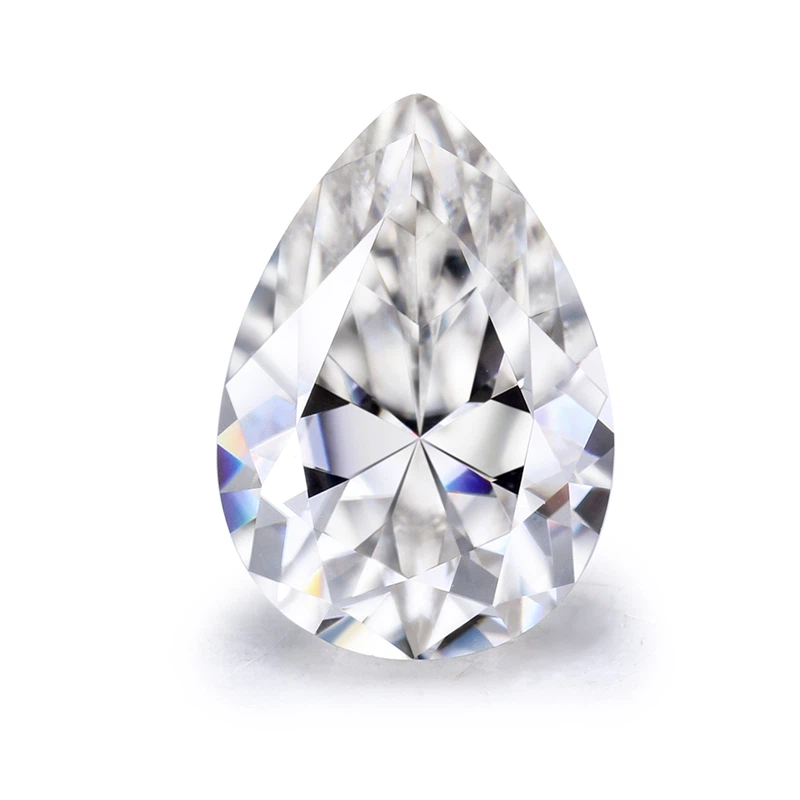
Asscher Moissanite is available in a variety of cuts and shapes. The Asscher cut, with its step - cut facets and square or rectangular shape, gives it a sophisticated and elegant look. Besides the classic Asscher cut, there are other options like the Cushion Cut Moissanite, Pear Cut Moissanite, and Crushed Ice Oval Diamond Moissanite. These fancy cuts add to the uniqueness and appeal of Asscher Moissanite.
Topaz also comes in a variety of cuts, but the range may be more limited compared to Asscher Moissanite. The availability of different cuts in Asscher Moissanite gives consumers more options to choose the shape that best suits their personal style and the design of the jewelry piece.
Uses in Jewelry
Asscher Moissanite is a popular choice for engagement rings, wedding bands, necklaces, and earrings. Its high durability and sparkle make it an excellent alternative to diamonds, especially for those who want a similar look at a lower cost.

Topaz is also widely used in jewelry, and its different colors make it suitable for a variety of styles. Blue topaz is often used in contemporary and modern jewelry designs, while the rarer pink and orange topaz can be found in more high - end and unique pieces. However, due to its lower hardness, topaz may require more careful handling in jewelry pieces that are worn daily.
Maintenance
Maintaining Asscher Moissanite is relatively easy. It can be cleaned with mild soap and warm water, and a soft brush can be used to gently remove any dirt or debris. Since it is highly resistant to scratches, regular cleaning can keep it looking as good as new for a long time.
Topaz, on the other hand, requires more cautious maintenance. In addition to regular cleaning, you need to be careful not to expose it to extreme temperatures or harsh chemicals, as these can damage the stone or cause its color to fade. It's also advisable to store topaz jewelry separately to prevent it from getting scratched by other harder gemstones.
Conclusion and Call to Action
In conclusion, Asscher Moissanite and topaz each have their own unique characteristics. Asscher Moissanite stands out for its high hardness, brilliant sparkle, diverse cut options, and more affordable price. Topaz offers a wide range of beautiful colors, which can be a draw for those seeking a more colorful gemstone.
If you're in the market for a gemstone for jewelry, whether it's an engagement ring or a special gift, Asscher Moissanite is definitely worth considering. As a supplier of Asscher Moissanite, I'm here to help you find the perfect stone for your needs. If you're interested in making a purchase or have any questions, feel free to reach out to me for a detailed discussion and procurement negotiation.
References
- "The Gemstone Encyclopedia" by Robert Weldon and Richard Hughes
- "Gemology: An Introduction" by Walter Schumann