

Do lab grown diamonds have a different appearance under different lighting conditions compared to natural diamonds?
Oct 16, 2025
Leave a message
Do lab grown diamonds have a different appearance under different lighting conditions compared to natural diamonds? This is a question that often comes up in the world of diamonds, and as a lab grown diamond supplier, I'm here to shed some light on the matter.
Understanding the Basics of Lab Grown and Natural Diamonds
Before we dive into the lighting conditions, let's first understand what lab grown and natural diamonds are. Natural diamonds are formed deep within the Earth's mantle over billions of years under extreme heat and pressure. They are then brought to the surface through volcanic eruptions. On the other hand, lab grown diamonds are created in a laboratory using advanced technology that replicates the natural diamond - forming process. Chemically, physically, and optically, lab grown diamonds are identical to natural diamonds. They are made of pure carbon atoms arranged in a crystal lattice structure.
The Impact of Lighting on Diamond Appearance
Lighting plays a crucial role in how a diamond appears. There are three main types of lighting conditions that we commonly encounter: natural sunlight, incandescent light, and fluorescent light.
Natural Sunlight
Natural sunlight is the most ideal lighting condition to evaluate a diamond's appearance. It is a full - spectrum light source that provides a balanced combination of all colors in the visible spectrum. Both natural and lab grown diamonds sparkle and shine under sunlight. The brilliance, fire, and scintillation of a diamond are most accurately visible in sunlight.
Brilliance refers to the white light reflected from the diamond's surface and internal facets. Fire is the dispersion of white light into the colors of the rainbow, and scintillation is the twinkling effect caused by the movement of light as the diamond or the observer moves. In sunlight, both lab grown and natural diamonds display these characteristics equally well. The cut of the diamond has a greater impact on how it looks in sunlight than whether it is lab grown or natural. A well - cut diamond, whether lab grown or natural, will reflect and refract light in a way that maximizes its beauty.
Incandescent Light
Incandescent light is produced by heating a filament inside a bulb until it glows. This type of light has a warm, yellowish tint. Under incandescent light, diamonds tend to take on a slightly warmer tone. Both lab grown and natural diamonds will show a similar appearance under incandescent light. The yellowish light can sometimes make the diamond's color grade seem a bit warmer, but this is not a sign of a difference between lab grown and natural diamonds.
If you are comparing two diamonds of the same color grade, one lab grown and one natural, under incandescent light, you will not be able to tell them apart based on their appearance. The warmth of the light affects both types of diamonds equally.
Fluorescent Light
Fluorescent light is commonly used in offices, stores, and some homes. It is a cooler light source with a different spectral distribution compared to sunlight and incandescent light. Fluorescent light can sometimes give diamonds a slightly bluish or greenish tint, especially if the diamond has a certain level of fluorescence.
Fluorescence is a property that some diamonds have, where they emit a visible light when exposed to ultraviolet light. Both lab grown and natural diamonds can have fluorescence. The presence and intensity of fluorescence can affect how a diamond looks under fluorescent light, but it is not related to whether the diamond is lab grown or natural. A diamond with strong fluorescence may appear hazy or milky under fluorescent light, and this can happen to both lab grown and natural diamonds with high fluorescence levels.
Scientific Evidence and Research
Numerous scientific studies have been conducted to compare the optical properties of lab grown and natural diamonds. These studies have consistently shown that there is no significant difference in how lab grown and natural diamonds interact with light. The American Gem Society (AGS) and the Gemological Institute of America (GIA) have both stated that lab grown diamonds have the same optical properties as natural diamonds.
The refractive index, which determines how light is bent and reflected within the diamond, is the same for lab grown and natural diamonds. The dispersion of light, which is responsible for the diamond's fire, is also identical. This means that under all lighting conditions, the fundamental way that light behaves inside a lab grown diamond is the same as in a natural diamond.
Our Lab Grown Diamond Offerings
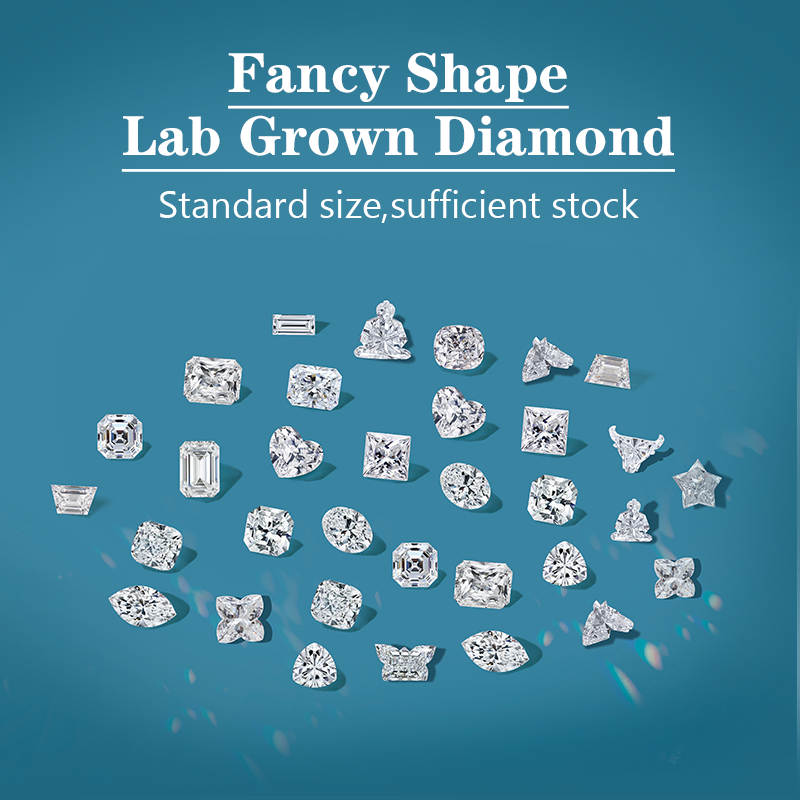
As a lab grown diamond supplier, we offer a wide range of high - quality lab grown diamonds. Our Lab Grown Diamonds are carefully crafted to meet the highest standards of quality. We have a variety of sizes, cuts, and color grades to choose from.

For example, our 1 Carat Lab Grown Diamond Engagement Gold Ring is a stunning piece that combines the beauty of a lab grown diamond with the elegance of gold. The 1 - carat diamond is cut to perfection, ensuring maximum brilliance and fire. Whether you view it in natural sunlight, incandescent light, or fluorescent light, it will look just as beautiful as a natural diamond ring.
We also have the 3 Carat Round IGI Certified Lab Grown Diamond. The IGI certification guarantees the quality and authenticity of the diamond. This large - carat diamond is a show - stopper, and its appearance is not affected by the lighting conditions in a way that is different from a natural diamond.
Conclusion
In conclusion, lab grown diamonds do not have a different appearance under different lighting conditions compared to natural diamonds. Both types of diamonds have the same chemical, physical, and optical properties, which means they interact with light in the same way. The appearance of a diamond under different lighting is more influenced by factors such as cut, color grade, and fluorescence, rather than whether it is lab grown or natural.
If you are in the market for a diamond, whether it's for an engagement ring, a piece of jewelry, or an investment, lab grown diamonds are a great option. They offer the same beauty and quality as natural diamonds at a more affordable price. If you have any questions or are interested in purchasing our lab grown diamonds, please feel free to reach out to us for a procurement discussion. We are more than happy to assist you in finding the perfect diamond for your needs.
References
- American Gem Society (AGS) research on diamond properties
- Gemological Institute of America (GIA) reports on lab grown and natural diamonds