

Are lab gemstone jewelry ethical?
Aug 22, 2025
Leave a message
Are lab gemstone jewelry ethical? This is a question that has been debated in the jewelry industry for quite some time. As a supplier of lab gemstone jewelry, I've spent a lot of time thinking about this topic, and I'm excited to share my insights with you.
Let's start by understanding what lab gemstone jewelry is. Lab gemstones, also known as synthetic or man - made gemstones, are created in a laboratory environment. Through advanced technological processes, they are made to have the same chemical, physical, and optical properties as their natural counterparts. For example, lab - grown diamonds, rubies, sapphires, and emeralds have the same crystal structures and characteristics as those mined from the earth.

One of the main ethical concerns in the traditional gemstone mining industry is related to environmental impact. Mining operations can cause significant damage to the environment. Large - scale open - pit mines can lead to deforestation, soil erosion, and water pollution. The use of heavy machinery and chemicals in the mining process releases harmful substances into the air and water, affecting local ecosystems and wildlife. For instance, mercury is often used in gold and gemstone mining to separate the valuable minerals from the ore. Mercury pollution can contaminate water sources, making them unfit for human consumption and harming aquatic life.
In contrast, the production of lab gemstones has a much lower environmental footprint. The controlled laboratory environment allows for a more efficient use of resources. There is no need for large - scale excavation, and the energy consumption can be optimized. Many lab - gemstone manufacturers are also committed to using renewable energy sources, further reducing their environmental impact. For example, some facilities use solar power to run their operations, which is a far cry from the fossil - fuel - intensive traditional mining methods.
Another ethical aspect to consider is the issue of human rights. In some parts of the world, gemstone mining is associated with poor working conditions, child labor, and exploitation. Miners often work in dangerous environments without proper safety equipment or fair compensation. They may be exposed to toxic chemicals and face the risk of cave - ins and other accidents. In addition, there have been cases of armed groups controlling mining areas and using the proceeds from gemstone sales to fund conflicts. This has given rise to the term "conflict gems" or "blood gems."
Lab gemstone production, on the other hand, typically takes place in a modern and regulated factory setting. Workers are provided with proper working conditions, fair wages, and safety training. There is no involvement in the unethical practices associated with some mining operations. As a lab - gemstone jewelry supplier, I can ensure that the products I offer are free from any such human - rights violations.
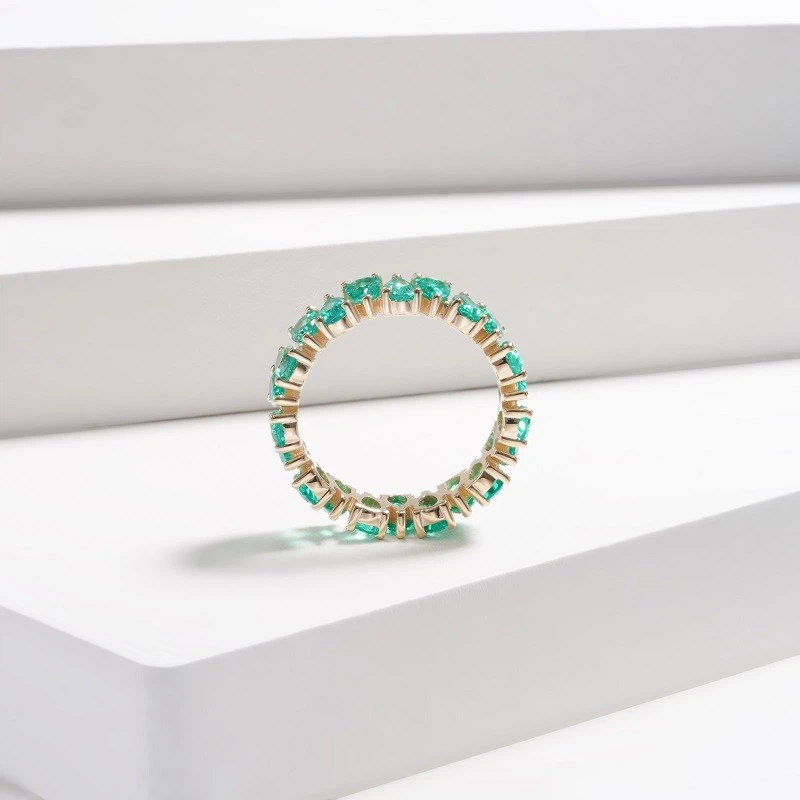
Now, let's talk about the quality and beauty of lab gemstone jewelry. Some people may question whether lab - grown gemstones are as beautiful as natural ones. The answer is a resounding yes. Thanks to advancements in technology, lab - grown gemstones can be produced with exceptional clarity, color, and cut. They are often of a higher quality than many natural gemstones on the market. For example, a Lab Grown Columbian Emerald Ring can feature a stunning emerald with vivid color and excellent transparency, all while being ethically sourced.
The cost - effectiveness of lab gemstone jewelry is also an important factor. Natural gemstones can be extremely expensive due to their rarity and the high cost of mining and processing. Lab - grown gemstones, on the other hand, are more affordable because they are mass - produced in a controlled environment. This means that consumers can enjoy high - quality gemstone jewelry at a fraction of the price. It also makes it possible for more people to own beautiful and ethical jewelry.
However, there are still some misconceptions about lab gemstone jewelry. Some consumers believe that lab - grown gemstones are "fake" or of inferior quality. This is simply not true. As mentioned earlier, lab - grown gemstones have the same chemical and physical properties as natural gemstones. They are real gemstones, just created in a different way. In fact, many gemological laboratories, such as the Gemological Institute of America (GIA), can provide certificates for lab - grown gemstones, verifying their authenticity and quality.
In the jewelry market, the demand for ethical products is on the rise. Consumers are becoming more conscious of the environmental and social impact of their purchases. They want to know where their jewelry comes from and whether it has been produced in an ethical manner. Lab gemstone jewelry meets these demands perfectly. It offers a sustainable and ethical alternative to traditional mined gemstones without compromising on quality or beauty.
As a lab - gemstone jewelry supplier, I am proud to offer a wide range of products that are not only beautiful but also ethically sourced. Whether you're looking for a statement piece like a Lab Grown Columbian Emerald Ring or a more understated piece of jewelry, I can provide you with high - quality options.
If you're a retailer or a jewelry designer interested in sourcing lab - gemstone jewelry, I invite you to get in touch with me. We can have a detailed discussion about your requirements, the product range, and the pricing. I'm confident that my products will meet your needs and help you offer ethical and beautiful jewelry to your customers.
In conclusion, lab gemstone jewelry is a highly ethical choice. It addresses the environmental and human - rights issues associated with traditional gemstone mining while offering high - quality and affordable products. As the demand for ethical jewelry continues to grow, lab - gemstone jewelry is set to become an even more popular option in the market.
References
- Gemological Institute of America (GIA). Reports on lab - grown gemstones.
- International Labour Organization (ILO). Reports on labor conditions in gemstone mining.
- Environmental Protection Agency (EPA). Studies on the environmental impact of mining and lab - gemstone production.
- Industry reports on the growth of the lab - gemstone market.