

What is the dispersion of lab sapphires?
Sep 15, 2025
Leave a message
Dispersion is a fundamental optical property that plays a crucial role in the allure and value of gemstones, including lab sapphires. As a leading supplier of lab sapphires, I've witnessed firsthand the growing interest in these synthetic gemstones and the questions that often arise about their characteristics, especially dispersion. In this blog post, I'll delve into what dispersion is, how it affects lab sapphires, and why it matters to gemstone enthusiasts and jewelry designers alike.
Understanding Dispersion
Dispersion refers to the phenomenon where white light is separated into its component colors as it passes through a medium, such as a gemstone. This occurs because different wavelengths of light travel at different speeds through the material, causing them to refract at different angles. The result is a beautiful display of spectral colors, similar to what you see in a rainbow or when light passes through a prism.

In gemology, dispersion is measured by the difference in refractive index between the shortest and longest wavelengths of visible light. The higher the dispersion value, the more pronounced the separation of colors, and the more vivid the "fire" or play of colors in the gemstone. Dispersion is typically expressed in units called "Brix refractometer degrees" or simply as a decimal value.
Dispersion in Natural Sapphires
Natural sapphires are a variety of the mineral corundum, which has a relatively low dispersion value of around 0.018. This means that compared to some other gemstones, such as diamonds (dispersion of 0.044) or cubic zirconia (dispersion of 0.060), natural sapphires exhibit less fire or play of colors. Instead, sapphires are prized for their intense color, clarity, and durability.
The color of a natural sapphire is determined by the presence of trace elements, such as iron, titanium, or chromium, in the crystal structure. These impurities absorb certain wavelengths of light, giving the sapphire its characteristic hue. For example, blue sapphires contain iron and titanium, while pink sapphires contain chromium.
Dispersion in Lab Sapphires
Lab sapphires, also known as synthetic sapphires or cultured sapphires, are created in a laboratory environment using advanced techniques that mimic the natural processes of gemstone formation. Despite being man-made, lab sapphires have the same chemical composition, crystal structure, and physical properties as natural sapphires, including their dispersion value.
Like natural sapphires, lab sapphires have a dispersion of around 0.018, which means they also exhibit a relatively low level of fire or play of colors. However, this does not detract from their beauty or value. In fact, lab sapphires are often preferred by jewelry designers and consumers for their consistent color, clarity, and affordability.
One of the advantages of lab sapphires is that they can be produced in a wide range of colors, including blue, pink, yellow, green, and white. This allows jewelry designers to create unique and customized pieces that are not limited by the availability of natural gemstones. Additionally, lab sapphires are often more environmentally friendly than natural sapphires, as they do not require mining or extraction from the earth.
Why Dispersion Matters
While dispersion may not be the most important factor when choosing a lab sapphire, it can still have an impact on the overall appearance and value of the gemstone. A higher dispersion value can create a more dramatic and eye-catching effect, especially in certain lighting conditions. However, it's important to note that dispersion is just one of many factors that contribute to the beauty and desirability of a gemstone.
Other factors to consider when choosing a lab sapphire include color, clarity, cut, and carat weight. The color of a lab sapphire should be vibrant, saturated, and evenly distributed throughout the gemstone. Clarity refers to the presence of inclusions or imperfections in the crystal structure, which can affect the transparency and brilliance of the gemstone. The cut of a lab sapphire can also have a significant impact on its appearance, as a well-cut gemstone will reflect and refract light more effectively, enhancing its color and brilliance.
Applications of Lab Sapphires
Lab sapphires have a wide range of applications in the jewelry industry, as well as in other fields such as electronics, optics, and watchmaking. In the jewelry industry, lab sapphires are often used as center stones in engagement rings, necklaces, earrings, and bracelets. They can also be used as accent stones to add color and sparkle to a piece of jewelry.
In the electronics industry, lab sapphires are used as substrates for semiconductor devices, such as light-emitting diodes (LEDs) and integrated circuits (ICs). Sapphire has excellent thermal conductivity, electrical insulation, and mechanical strength, making it an ideal material for these applications.
In the optics industry, lab sapphires are used as lenses, windows, and prisms in a variety of optical devices, such as cameras, telescopes, and microscopes. Sapphire has a high refractive index and low dispersion, which makes it an excellent material for these applications.
In the watchmaking industry, lab sapphires are used as watch crystals to protect the dial and hands of a watch. Sapphire is extremely hard and scratch-resistant, making it an ideal material for this application.
Conclusion
In conclusion, dispersion is an important optical property that affects the appearance and value of gemstones, including lab sapphires. While lab sapphires have a relatively low dispersion value compared to some other gemstones, they are still prized for their intense color, clarity, and durability. As a leading supplier of lab sapphires, I'm committed to providing high-quality gemstones that meet the needs and expectations of my customers.
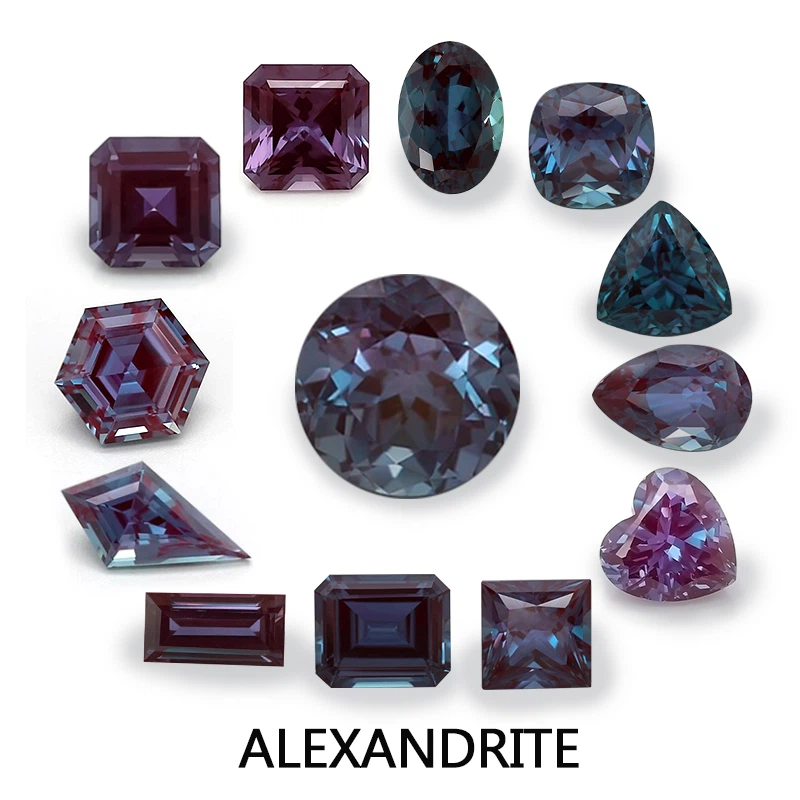
If you're interested in learning more about lab sapphires or other Lab Grown Alexandrite gemstones, or if you're looking to purchase lab sapphires for your jewelry designs, please don't hesitate to contact me. I'd be happy to answer any questions you may have and help you find the perfect gemstones for your needs.
References
- Nassau, K. (1980). Gems Made by Man. Van Nostrand Reinhold Company.
- Webster, W. A. (1994). Gemstones of the World. Sterling Publishing Company.
- Kammerling, R. C. (2000). Gem Identification Made Easy. Gemworld International.