

How do lab sapphires compare to other synthetic gemstones?
Sep 25, 2025
Leave a message
Hey there! I'm a supplier of lab sapphires, and I've been in this gemstone business for quite a while. Over the years, I've seen a huge surge in the popularity of synthetic gemstones. People are becoming more aware of them, and they're looking for alternatives to natural gemstones for various reasons, like cost, ethical concerns, and environmental impact. In this blog, I'm going to compare lab sapphires with other synthetic gemstones.
Let's start with the basics. Lab sapphires are created in a controlled laboratory environment. They have the same chemical composition, crystal structure, and physical properties as natural sapphires. The only difference is that they're made by humans instead of being formed over millions of years in the Earth's crust.
One of the most well - known synthetic gemstones is cubic zirconia. CZ, as it's often called, is extremely popular because it's very affordable. You can get a large, sparkling CZ for a fraction of the price of a lab sapphire of the same size. But there are some significant differences. CZ has a higher refractive index than sapphire, which means it can look very sparkly and brilliant. However, this high refractive index can also make it look a bit "fake" or overly flashy to some people. Lab sapphires, on the other hand, have a more subtle and elegant sparkle. They're known for their durability, with a hardness of 9 on the Mohs scale (just below diamonds). CZ, in comparison, has a hardness of around 8, which means it's more prone to scratching and wear over time.
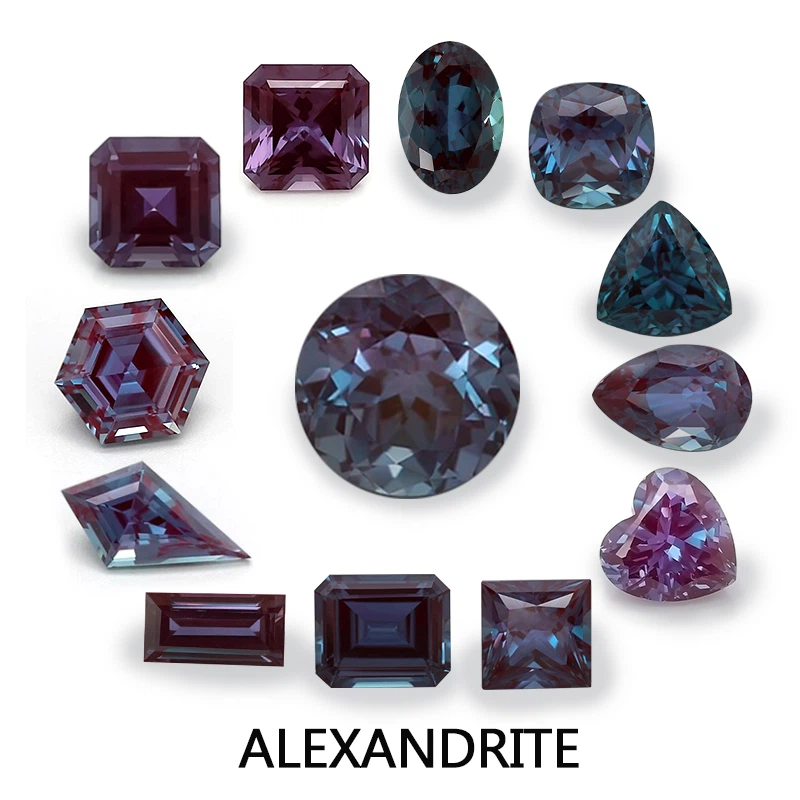
Another synthetic gemstone that's been gaining popularity is Lab Grown Alexandrite. Alexandrite is a fascinating gem because it changes color depending on the light source. In natural form, it's extremely rare and expensive. Lab - grown alexandrite offers a more accessible way to own this unique gem. When comparing it to lab sapphires, the main difference is the color - changing property. Lab sapphires come in a wide range of colors, including blue, pink, yellow, and white, but they don't change color like alexandrite. However, sapphires are more readily available in larger sizes. Alexandrite, even in lab - grown form, can be a bit more difficult to source in large, high - quality specimens.
Moissanite is yet another synthetic gemstone that's often compared to diamonds and other gemstones. It has a very high refractive index and dispersion, which gives it a lot of fire and brilliance. Moissanite is also quite durable, with a hardness of 9.25 on the Mohs scale. But when it comes to color, lab sapphires have an edge. Moissanite typically has a slight yellow or green tint, especially in larger stones. Lab sapphires can be produced in a pure, color - saturated form without these unwanted tints. Also, sapphires have a more classic and traditional look, which some people prefer over the more modern and flashy appearance of moissanite.
Now, let's talk about the cost. As a lab sapphire supplier, I know that cost is a major factor for many of my customers. Lab sapphires are generally more affordable than natural sapphires, but they can vary in price depending on the color, size, and quality. Compared to other synthetic gemstones, they're usually in the mid - range price - wise. Cubic zirconia is the cheapest, followed by moissanite, and then lab sapphires. Lab - grown alexandrite can be on the more expensive side, especially if it has a strong color - change effect and high clarity.
In terms of availability, lab sapphires are widely available. We can produce them in large quantities and in a variety of shapes and sizes. Cubic zirconia is also very easy to find, as it's mass - produced. Moissanite is becoming more common, but it might not be as readily available in all jewelry stores. Lab - grown alexandrite, as I mentioned earlier, can be a bit more scarce, especially in larger sizes and high - quality grades.
When it comes to use in jewelry, lab sapphires are extremely versatile. They can be used in rings, necklaces, earrings, and bracelets. Their durability makes them suitable for everyday wear. Cubic zirconia is often used in costume jewelry because of its low cost. Moissanite is commonly used as a diamond alternative in engagement rings. Lab - grown alexandrite, with its unique color - changing property, is often used in statement pieces to showcase its beauty.

If you're a jewelry designer or a retailer, choosing the right synthetic gemstone for your products is crucial. Lab sapphires offer a great balance of beauty, durability, and cost. They can appeal to a wide range of customers, from those looking for an affordable yet elegant piece of jewelry to those who want a high - quality gemstone for a special occasion.
If you're interested in purchasing lab sapphires for your jewelry business or for personal use, I'd love to have a chat with you. We can discuss your specific needs, whether it's a particular color, size, or quantity. Just reach out, and we can start a conversation about how lab sapphires can be the perfect choice for you.
References
- Gemological Institute of America (GIA) reports on synthetic gemstones
- Industry publications on gemstone manufacturing and trends